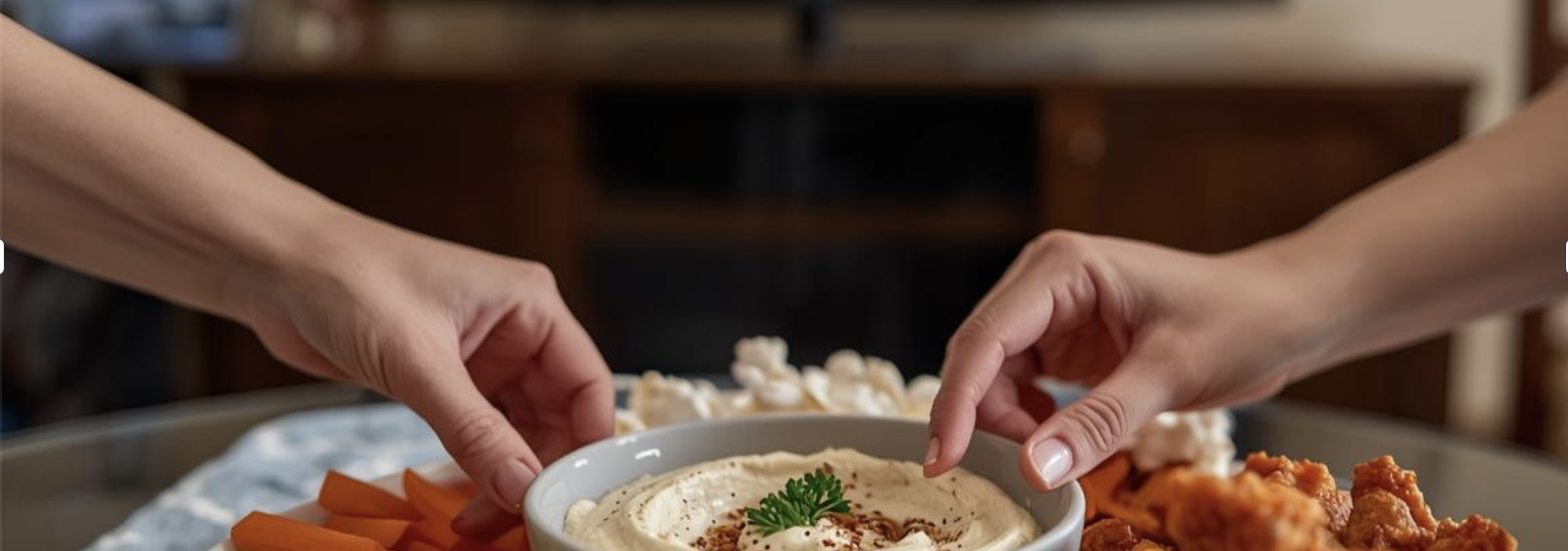
The Super Bowl is just around the corner, and if you’re like many people, you’re already thinking about wings, pizza, nachos, and maybe a few extra drinks while cheering on your team. JK…let’s be real, you’re mostly here for the snacks. Game day is fun, social, and full of tradition, but it can also be a challenge for your health goals. If you’ve ever felt stressed about what to eat or worried you’ll go overboard, this guide is for you. Let’s talk about how to enjoy the big game (dairy-free options included) without feeling guilty or missing out on the fun.
Why the Super Bowl Can Wreck Your Nutrition Goals
Game-day eating often leads to a perfect storm of overeating:
Calories can skyrocket: Tailgate-style spreads can add up to 5,000 calories, almost double what most people need in a day [1].
Sodium overload: One serving of advertised game-day foods can contain 910 mg of sodium, nearly half your daily limit [2].
Mindless eating: Special occasions, like the Super Bowl, make us more likely to snack without thinking [3][4].
Weekend habits: Saturday games mean extra energy, fat, sugar, and sodium intake, plus fewer fruits and veggies [5].
Alcohol adds up: Beer or cocktails with high-carb snacks can spike triglycerides, though effects vary by person [1].
Ultra-processed foods dominate: Chips, cookies, processed meats, and sugary drinks can all impact heart health [6][7].
It’s easy to eat way more than your body needs when there’s food everywhere, excitement is high, and you’re focused on the game. But with some small tweaks, you can still have fun and stay on track.
A More Realistic Way to Think About Superbowl Food
You don’t need a perfect plate on Super Bowl Sunday. Remember that one meal, or even one day, does not define your health. What tends to help most is focusing on balance rather than restriction and adding supportive foods instead of trying to avoid everything.
Research supports that different eating patterns including dairy-free and plant-forward eating patterns, can help meet nutrition needs when they’re thoughtfully planned [8]. If dairy isn’t a part of your diet, a bit of extra attention o variety and fortified foods can go a long way.
Game-Day Smart Swaps
You don’t have to skip wings or pizza. Here’s how to make your favorites a bit friendlier to your heart:
Chicken wings: Bake or grill (or air-fry) skinless chicken and flavor with herbs, garlic powder, paprika, or cayenne instead of salt-heavy sauces [2][3]. Not in the mood for meat? A Vegan Buffalo Cauliflower Wing-style recipe can be just as fun on game day.
Chips & dip: Swap regular chips for baked chips or veggie sticks with hummus or Greek yogurt–based dips [2]. (Or dairy-free Greek-yogurt-based dips).
Pizza: Use a whole wheat crust, pile on vegetables, part-skim mozzarella, and limit processed meats [2][4]. If dairy isn’t your thing, a lighter layer of sauce, extra veggies and dairy-free or no cheese at all can still be satisfying.
Nachos: Try baked chips, black beans for protein and fiber, fresh veggies, and reduced-fat cheese [2]. Cheese can be part of it if you enjoy it, but if dairy-free alternatives or skipping cheese altogether work just as well. Check out this dairy free “Loaded Vegan Chili Nachos” recipe for some inspo.
Tip: These swaps don’t make your favorites boring—they just make them more balanced so you can enjoy the game without guilt.
Build a Healthier Super Bowl Spread
If you’re hosting or bringing a dish, focus on colorful, nutrient-rich foods:
Veggie platters: Let your raw vegetables shine as the star of your spread. Pair them with this Creamy Homemade Hummus for a satisfying protein-rich dip that’s naturally dairy-free.
Fruit skewers: Naturally sweet, and colorful, with no added sugar needed, perfect for a refreshing snack.
Nuts: Choose unsalted or lightly salted. For a satisfying and crunchy protein boost.
Whole grain crackers: Pair with bean dips or hummus for fiber and flavor and it’s dairy-free!
Grilled chicken skewers: Seasoned with herbs and served with yogurt-based sauce or try a dairy-free sauce alternative like BBQ sauce if you prefer.
Popcorn: Air-popped or lightly salted is a great snack instead of buttered, or for extra flavor without the dairy, sprinkle with nutritional yeast.
Packing your table with fruits, veggies, whole grains, and lean protein keeps your spread fun and heart-healthy.
Portion Control for the Big Game
Even healthy options add up, so try these visual cues:
Chicken: Deck-of-cards size per serving
Dip/snacks: Baseball-sized portion per cup
Tip: Use a smaller plate and fill it once, instead of grazing constantly [2]
Drinks Matter Too
Different beverages can have a bigger impact than we expect. Sticking with water, still or sparkiling, helps keep you hydrated and can even help with appetite [9] . If you want a little variety, unsweetened iced tea, flavored sparking water with or without a splash of 100% fruit juice or water with lemon, lime or cucumber are tasty options without extra sugar. You don’t have to cut out sugary drinks, but keeping them as an occasional treat instead of a regular habit is usually better for your overall health. [10][11][7].
What Balanced Game-Day Eating Actually Look Like
Instead of stressing about what to cut out, it can be much more helpful to think about what to include. Snacks and meals that combine protein, fiber-rich carbs, and a little healthy fat tend to keep you full longer and give steadier energy [9][11].
On Super Bowl Sunday, that could mean:
Chips with hummus or guacamole
Wings alongside a big veggie platter
Chili with beans, vegetables, and protein
These kinds of combinations help you feel satisfied without turning food into a math problem. Many familiar game-day foods fit right in, including hummus, bean dips, guacamole, popcorn, roasted chickpeas, grilled chicken skewers, baked fish tacos, edamame, and veggie-forward chili [8][10] [11][12].
Hosting or Attending: Tips for Everyone
If you’re hosting:
Whether you’re calling the plays as the host or cheering from the sidelines as a guest, a little planning can make game day fun, balanced and dairy-free friendly!
Tips:
Offer a mix of healthy and indulgent options. Think veggie platters next to wings or loaded nachos.
Make veggies and fruit easy to reach for quick touchdowns on your plate.
Use smaller plates to help with portion control (no need for a fumble here!).
Label dishes so guests with dietary needs, like dairy-free or plant-forward, know what’s safe.
If you’re a guest:
Have a healthy snack before you go so you don’t arrive starving and end up in overtime snacking.
Check out all the food options before filling your plate, scouting first leads to better plays!
Sit away from the food table to avoid mindless snacking between commercials.
Bring a healthy dish to share, it’s a win-win for you and the team.
With a little planning, you can enjoy all the flavors of game day, dairy-free options included, while keeping balance and fun front and center!
FAQ
Can I still enjoy Super Bowl snacks?
Absolutely! Smart swaps, portion control, and balance make it possible to enjoy favorites without overdoing it.
How do I avoid overeating while watching the game?
Eat a healthy snack before, use smaller plates, and fill your plate mindfully instead of grazing.
What about alcohol and game-day drinks?
Moderate your intake, sip water or sparkling water, and pair drinks with protein- or fiber-rich snacks.
The Bottom Line
The Super Bowl is one day, it’s meant to be fun, social, and delicious! You can still enjoy your favorite snacks while making a few mindful swaps, keeping an eye on portions and balancing indulgences with nourishing choices. Including plenty of fruits, vegetables, whole grains, lean proteins, and healthy fats, even dairy-free options, helps support heart and metabolic health [2][6][7].
Want to learn more?:
Looking for more tips to make game-day or any day eating work for you? Contact us for practical, easy-to-use strategies that fit your lifestyle, no fumbles required!
References
Syed-Abdul MM, Jacome-Sosa M, Hu Q, et al. The Tailgate Study: Differing Metabolic Effects of a Bout of Excessive Eating and Drinking. Alcohol (Fayetteville, N.Y.). 2021;90:45-55. doi:10.1016/j.alcohol.2020.11.001.
Al-Zoubaidi L, Vinsdata N, Heidel RE, Hauptman PJ. Salt and Nutritional Content of Foods Advertised During Televised Professional Football Games. JAMA Network Open. 2025;8(1):e2457307. doi:10.1001/jamanetworkopen.2024.57307.
Verhoeven AA, Adriaanse MA, de Vet E, Fennis BM, de Ridder DT. It’s My Party and I Eat if I Want To. Reasons for Unhealthy Snacking. Appetite. 2015;84:20-27. doi:10.1016/j.appet.2014.09.013.
Koenigstorfer J. Childhood Experiences and Sporting Event Visitors’ Preference for Unhealthy Versus Healthy Foods: Priming the Route to Obesity?. Nutrients. 2018;10(11):E1670. doi:10.3390/nu10111670.
An R. Weekend-Weekday Differences in Diet Among U.S. Adults, 2003-2012. Annals of Epidemiology. 2016;26(1):57-65. doi:10.1016/j.annepidem.2015.10.010.
Williams KA, Aggarwal M, Agustina R, et al. Nutrition and Front-of-Package Food Labeling as a Catalyst for Cardiovascular Health: 2025 ACC Concise Clinical Guidance. J Am Coll Cardiol. 2025;S0735-1097(25)10156-3. doi:10.1016/j.jacc.2025.11.003.
Mozaffarian D. The 2025-2030 Dietary Guidelines for Americans. JAMA. 2026. doi:10.1001/jama.2026.0283.
Gardner CD, et al. Popular Dietary Patterns and AHA Guidance. Circulation. 2023;147(22):1715-1730. Dietary pattern alignment.
American Diabetes Association. Facilitating Positive Health Behaviors. Diabetes Care. 2026;49(Suppl 1):S89-S131.
Van Horn L, et al. Recommended Dietary Pattern for AHA/ACC Guidelines. Circulation. 2016;134(22):e505-e529.
Kushi LH, et al. American Cancer Society Nutrition Guidelines. CA Cancer J Clin. 2012;62(1):30-67.
Lichtenstein AH, et al. Dietary Guidance to Improve Cardiovascular Health. Circulation. 2021;144(23):e472-e487.
This post is for educational purposes only and does not provide individualized medical advice. Consult your healthcare provider or registered dietitian for personalized recommendations.